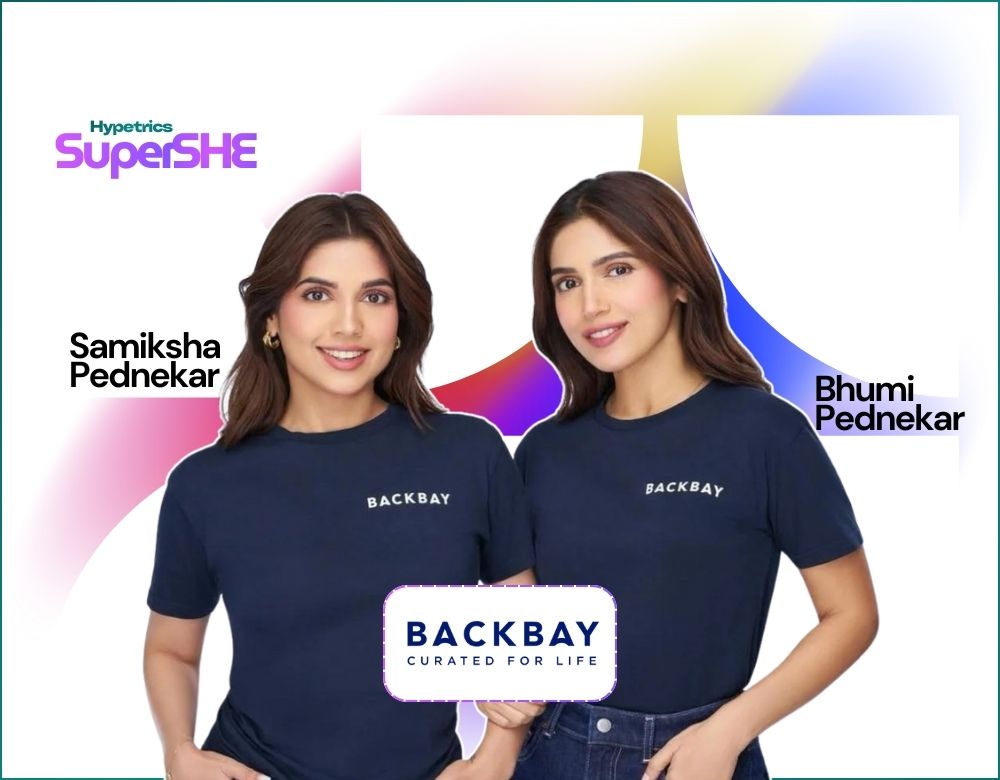
August 2025, Bhumi Pednekar and samiksha pednekar stepped into India’s bottled water market with BACKBAY. A brand positioned itself as a premium intersection of sustainability and quality. It was a calculated step taken by bhumi and samiksha into a sector valued at Rs 20,000 crores approx, they chose to target emerging premium and sustainable hydration segment that has been kept in projection to grow at 13.5% CAGR through 2028.
Market Context and Business Rationale
India;s bottled water segment that remained dominated followed by mass-market brands, playing the game primarily on price and distribution. Backbay’s footprint strategy zoomed out from this model, keeping a sharp eye on premium segment characterization by specific consumer priorities: sourcing transparency, environmental impact and quality standards
BackBay’s footprint timing aligns with observable shifts in urban consumer behaviour. Increasing disposable incomes in metro cities, rising health consciousness post-pandemic, and growing environmental awareness among millennial and Gen-Z consumers have created a notable demand in premium sustainable products. However, this segment remains relatively small compared to the mass market, presenting both opportunity and limitation for brands like BACKBAY.
Both Bhumi and Samiksha identified a market gap that consumers are searching for a sustainable alternative to conventional bottled water for travelling or away from home – their own experience landed them to this insight after vanishing use of plastic from their personal lives years prior to launching the business.
Founder Profiles and Operational Structure
Bhumi Pednekar adds a strong sense of environmental credibility and brand recognition to her venture. Since 2019, she has been running Climate Warrior, a non-profit advocacy platform dedicated to environmental protection, which she funds through her earnings from acting. Her initiatives include efforts to reduce carbon footprints, support for Healing Himalayas (an NGO tackling pollution in mountain regions), and active participation in coastal cleanup projects. The United Nations Development Programme (UNDP) India has recognized her as a National Advocate for Sustainable Development Goals, which underscores the legitimacy of her environmental efforts.
Before launching BACKBAY, Bhumi invested in several sustainability-focused startups, showing her ongoing commitment to green business ventures. The brand is self-funded, reportedly stemming from an investment portfolio she started building at just 17 with her first acting paycheck.
Samiksha Pednekar takes charge of operational management and strategic business decisions. With her legal background, she brings expertise in regulatory and compliance frameworks, while her entrepreneurial mindset drives the distribution strategy and partnership development. The way they divide responsibilities – Bhumi focusing on brand vision and strategy, and Samiksha managing operations highlights the complementary skills they both bring to the table as co-founders.
Product Specifications and Differentiation Strategy
BACKBAY Aqua taps into the purest natural mineral water sourced from the melt of Himalayan glaciers. As the water flows through mineral-rich geological layers, it picks up essential minerals like magnesium, calcium, and potassium before being drawn from a safeguarded reservoir. The bottling takes place right at the source in Himachal Pradesh, where the facility boasts a production capacity of around 45,000 boxes each day.
What sets BACKBAY apart is its unique packaging. They use FSC-certified paperboard cartons topped with plant-based caps made from sugarcane resin, moving away from the typical PET plastic or glass bottles you often see. The company claims this packaging is designed to handle India’s high temperatures without any risk of chemical leaching an important factor for ensuring quality in a tropical climate.
BACKBAY offers two sizes: a 500ml bottle priced at Rs 150 and a 750ml bottle at Rs 200. This pricing strategy places BACKBAY at 3-5 times the cost of standard bottled water brands, clearly aiming for a premium market rather than competing for volume sales.
Distribution Strategy and Channel Selection
BACKBAY has rolled out a carefully planned market entry strategy, kicking things off in four major cities: Mumbai, Delhi, Bengaluru, and Hyderabad. By focusing on these areas, they can really hone in on their marketing efforts and operational strategies in high-density, premium consumer markets.
Their distribution channels are quite diverse and include:
– Modern Trade: Nature’s Basket, Food Stories, Food Square
– Quick Commerce: Swiggy Instamart, Zepto
– E-commerce: Amazon, and their own D2C website
– HoReCa: Selective partnerships with hotels, restaurants, and cafes
The strategy emphasizes placing their products in upscale retail spaces and on digital platforms that cater to urban consumers who are tech-savvy. They also have plans to expand into institutional channels like schools, gyms, airports, and corporate facilities, indicating a B2B angle alongside their consumer retail efforts.
This selective distribution method gives them better control over brand positioning, although it may slow down their market penetration compared to the more aggressive strategies used by established competitors.
Sustainability Integration and Environmental Positioning
BACKBAY’s commitment to the environment goes beyond just the materials they use for packaging; it also encompasses their operational practices. Some of the initiatives they’ve reported include:
– Using electric vehicles for distribution to cut down on carbon emissions
– A women-led team at their bottling facility, which promotes social sustainability
– Packaging materials that are FSC-certified
– Caps made from bio-based materials instead of traditional petroleum-derived plastics
The founders see sustainability as a fundamental part of their brand identity, not just a marketing gimmick. However, they haven’t publicly shared any quantifiable data on their environmental impact, like lifecycle carbon footprint comparisons, metrics on plastic waste reduction, or third-party environmental certifications. As the brand grows, having independent verification of their environmental claims would really boost their credibility.
Financial Model and Growth Trajectory
BACKBAY is a self-funded venture, which means it doesn’t rely on outside venture capital. This gives founders the freedom to operate independently, but it does limit the amount of growth capital available. With a revenue target of Rs 100 crore, the company clearly aims for significant growth beyond just a niche market. To hit this ambitious goal, they’ll need to:
– Expand geographically beyond their initial four cities
– Build a strong distribution network
– Consider extending their product line beyond just water
– Maintain premium pricing without diluting their brand in the mass market
Right now, details about the brand’s burn rate, customer acquisition costs, and unit economics are not available, making it tough to assess their financial trajectory. However, their premium pricing likely leads to higher gross margins compared to mass-market brands, which could help balance out lower sales volume.
Competitive Landscape Analysis
BACKBAY is stepping into a market that’s already buzzing with established players across various segments. In the Mass Market, heavyweights like Bisleri, Kinley (Coca-Cola), and Aquafina (PepsiCo) are leading the charge with their extensive distribution and competitive pricing. When it comes to the Premium Segment, brands like Evian and Perrier, along with some local premium options, are vying for attention based on quality and sourcing. Meanwhile, in the Sustainable/Ethical space, new brands are trying to carve out a niche by highlighting their environmental credentials, but none quite match the founder profiles or financial backing of the bigger names.
BACKBAY has some solid competitive edges, including the founder’s brand equity, genuine sustainability credentials, and a pioneering role in bio-based packaging in India. However, the established players have the upper hand with their robust distribution networks, strong brand recognition, and deeper pockets. If sustainable packaging turns out to be a hit in the market, it’s likely that the larger companies will jump on the bandwagon, leveraging their scale to gain an even bigger advantage.
Consumer Response and Market Reception
The early response from the market seems to be split. On one hand, environmentally conscious consumers with some extra cash are embracing the higher prices and the focus on sustainability. On the other hand, those who are more price-sensitive are raising eyebrows about whether the value really stacks up against cheaper, mass-market options.
Social media chatter and online reviews reveal a few key points:
– People are loving the innovative packaging and design.
– There’s a strong appreciation for the transparency in sourcing.
– However, many are critical of the premium pricing, especially in a market that’s more budget-conscious.
– Questions are also popping up about how accessible and available the products really are.
This kind of mixed feedback is pretty typical for premium products in a developing market. The big question now is whether there are enough sustainability-minded consumers who are willing to pay a bit more to meet the ambitious growth targets that have been set.
Pricing Strategy and Market Positioning Analysis
The pricing of Rs 150 for 500ml and Rs 200 for 750ml is a clear move to position the product as a premium offering. This pricing strategy comes with its own set of pros and cons:
Advantages:
– It allows for higher profit margins, which helps cover sustainable production costs.
– It aligns with a premium brand image.
– It helps filter the customer base to focus on a specific target segment.
– It supports a selective distribution approach.
Challenges:
– It limits the potential market size, especially among price-sensitive consumers.
– It creates a hurdle for cost-conscious shoppers who might be hesitant to try the product.
– It faces competition from other premium brands that might offer lower prices.
– It requires a consistent perception of value to keep the pricing power intact.
The founders argue that the pricing reflects the genuine costs of production, emphasizing sustainable sourcing and innovative packaging. Ultimately, whether consumers are willing to embrace this value proposition on a larger scale will determine how sustainable this pricing strategy really is.
Brand Architecture and Future Category Potential
While BACKBAY Aqua is currently the only product on offer, the brand’s positioning as a beverage company rather than just a water brand hints at exciting possibilities for expanding into new categories. To hit that ambitious Rs 100 crore revenue target, it seems likely that diversifying the product lineup beyond a single SKU will be essential.
Here are some potential areas for expansion:
– Functional drinks that come packed with minerals or vitamins
– Flavored waters or products designed for enhanced hydration
– Other beverage categories that align with health and sustainability values
– Various package sizes tailored for institutional or bulk sales
Any new offerings will need to uphold the sustainability and quality standards that are core to the brand’s identity. This focus on commitment may limit the options for category expansion compared to brands that don’t have such strong positioning.
Operational Challenges in Scaling
BACKBAY is encountering a few operational hurdles as it grows:
Supply Chain Complexity: Keeping up with sourcing from the Himalayas, using specialized packaging materials, and ensuring quality control across a larger production scale demands a well-oiled supply chain management system.
Capital Requirements: Expanding geographically, boosting production capacity, and investing in marketing all require a hefty amount of capital. Being self-funded means there’s less capital available compared to competitors backed by venture capital.
Talent Acquisition: Assembling a team with the right mix of sustainable business know-how, beverage industry experience, and a shared vision for the brand takes time and effort.
Distribution Economics: Striking a balance between efficient distribution in quick commerce and modern trade while preserving a selective brand image creates a bit of a tug-of-war between being accessible and maintaining exclusivity.
Regulatory Navigation: The beverage industry is rife with regulations, environmental compliance needs, and the complexities of operating across multiple states, all of which require constant legal and regulatory oversight.
Celebrity Entrepreneurship Model Assessment
BACKBAY is all about hands-on celebrity entrepreneurship, setting itself apart from the usual celebrity endorsement game. Both founders are actively involved, Samiksha takes charge of daily management, while Bhumi focuses on strategy and vision. This setup brings several advantages:
Strengths:
Genuine alignment between the founders and the brand
Direct oversight and quick decision-making
Increased media attention and valuable earned media
Strong personal credibility on sustainability topics
Risks:
Time limitations due to the founders’ other professional obligations
The chance of being seen as a vanity project if things don’t go as planned
Potential damage to the founders’ reputations if the business struggles
Limited capacity to manage operations as the business grows
For success, the founders need to juggle their operational roles with their other commitments while also building a management team that can operate independently.
Environmental Impact Measurement and Verification
BACKBAY is all about highlighting the environmental perks that come with their innovative packaging and operational practices. But to really get a clear picture of their environmental impact, they need to dive into a few key areas:
– A lifecycle assessment that compares paper cartons, PET, and glass
– Calculating the carbon footprint from sourcing, production, and distribution
– Measuring how much plastic waste they’re reducing
– Evaluating water usage efficiency
– Obtaining third-party environmental certifications
As the brand grows, having solid data on their environmental impact and getting independent verification will not only bolster their sustainability claims but also help them stand out in a market where greenwashing is becoming more common.
Industry Implications and Precedent Setting
BACKBAY’s market performance has broader implications that go beyond just the individual business. If it finds commercial success, it could serve as a strong endorsement for the viability of sustainable packaging in India’s unique climate, possibly speeding up the industry’s shift towards plastic alternatives. Bigger beverage companies might see BACKBAY’s journey as a solid example of how premium sustainable products can thrive.
On the flip side, if the premium pricing keeps BACKBAY confined to a small niche, it could reinforce the belief that sustainable options can’t scale up in price-sensitive markets like India. Additionally, this venture offers valuable insights into how effective celebrity entrepreneurship can be in the realm of operationally intensive consumer products, which could guide future celebrity business endeavors.
Growth Metrics and Success Indicators
To keep an eye on BACKBAY’s growth, here are some key performance indicators to watch:
– Revenue Growth: How quickly we’re moving towards that Rs 100 crore goal.
– Geographic Expansion: The timeline for entering new markets and how we’re performing in those cities.
– Distribution Density: The number of retail outlets and our reach in quick commerce.
– Repeat Purchase Rate: How loyal our customers are and how often they come back to buy again.
– Customer Acquisition Cost: The efficiency of our marketing efforts and the economics behind each unit.
– Production Scale: How well we’re utilizing our capacity and plans for expansion.
– Product Extensions: Expanding our categories and adding new SKUs.
– Environmental Metrics: Measuring our impact on sustainability.
Market Forecast and Trajectory Assessment
BACKBAY’s journey over the next couple of years could take a few different directions:
Scenario 1 – Premium Niche Success: They carve out a profitable spot in the premium sustainable market without going for mass-market growth, aiming for revenues between Rs 20-40 crore.
Scenario 2 – Scaled Growth: They broaden their distribution and product range while keeping their brand identity intact, targeting around Rs 100 crore through expanding into new regions and categories.
Scenario 3 – Acquisition Target: They prove the viability of sustainable packaging, catching the eye of larger beverage companies looking to enhance their sustainable offerings.
Scenario 4 – Market Constraint: High pricing could restrict their market reach, causing growth to stall below a level that makes commercial sense.
Current trends suggest that Scenario 1 or 2 is the most likely outcome, with their success hinging on how well they execute their plans and how quickly the market develops.
Data-Driven Business Assessment
When we look at BACKBAY from a data and intelligence standpoint, it really stands out as a smart market entry with some key features:
Strategic Positioning: The brand sets itself apart with unique packaging, a premium image, and a strong commitment to sustainability, which helps carve out a clear identity.
Founder Credibility: The founder’s genuine environmental background and hands-on involvement help to ease any doubts about celebrity endorsements.
Market Timing: The timing of their entry is spot on, aligning perfectly with the positive demographic and psychographic trends in their target audience.
Capital Structure: Being self-funded gives them the freedom to operate independently, but it does limit how quickly they can grow.
Operational Risk: There are some execution risks due to the complexities of the supply chain, the founder’s capacity, and the challenges of scaling up.
Market Risk: Their premium pricing in a market that’s sensitive to costs means they have a smaller pool of potential customers to target.
Conclusion: Business Viability Assessment
Bhumi and Samiksha Pednekar’s BACKBAY is a thoughtful effort to carve out a premium, sustainable niche in India’s bottled water scene. This venture is backed by the founders’ credibility, innovative packaging, the right timing in the market, and a genuine commitment to sustainability.
However, its success hinges on a few key factors: the ability to uphold operational standards while scaling up, whether consumers will embrace the premium pricing at a volume that makes sense, how larger competitors will react, and the quality of execution as the founders juggle business demands with their other professional responsibilities.
The goal of reaching Rs 100 crore in revenue might seem ambitious, but it’s not out of reach, especially with premium pricing and the anticipated growth of the market. To hit this target, they’ll need to successfully expand geographically, possibly extend their product line, and maintain a strong perception of value among consumers that justifies the higher prices.
From a business intelligence standpoint, BACKBAY is a crucial case study for sustainable consumer products in emerging markets. Its journey will yield valuable insights into consumer behavior, the feasibility of sustainable packaging, the effectiveness of celebrity entrepreneurship, and how well premium positioning can hold up in price-sensitive markets.
As BACKBAY is still in its early days—about four months since launching—it’s too soon to definitively say whether it will succeed or fail. We need more time and performance data to make that call. Current signs indicate that the business has made a solid initial impact and raised consumer awareness. Whether this will lead to lasting growth and profitability is still up in the air, depending on how well they execute and how the market responds.
For those in the beverage industry, entrepreneurs exploring sustainable business models, and investors looking at consumer product opportunities, BACKBAY offers a fascinating ongoing case study in trying to balance environmental values with commercial success in India’s intricate and competitive market landscape.