











Amita Roy, Inhanss, Hypetrics

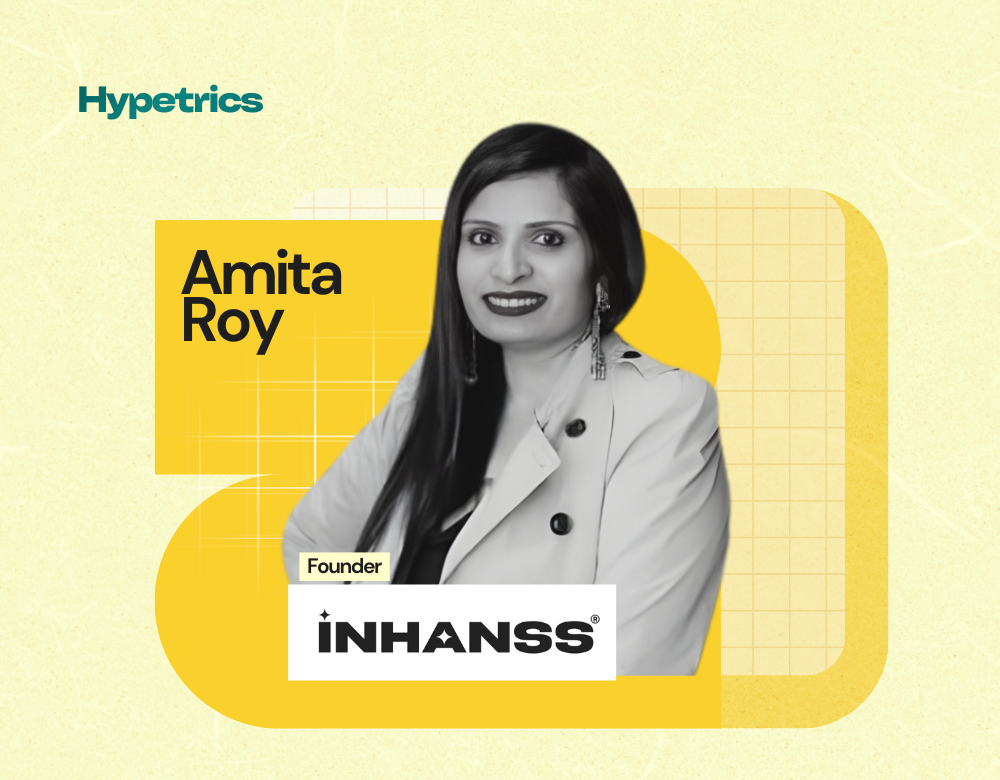
Amita Roy Rethinking Jewellery Consumption through a System-Led, Looks-First Model with Inhanss

India’s jewellery market has long been anchored in occasion. Weddings, festivals, ceremonies, and milestone events continue to drive a significant portion of purchasing behaviour. Even within the expanding fashion and costume segment, buying patterns tend to be episodic. A piece is selected for a specific outfit or moment. Once the moment passes, repetition is limited. The Indian jewellery market is not a static market. In 2023, the market size was estimated to be a little over USD 85 billion, and if the current trends are anything to go by, it is likely to breach the USD 120 billion mark before the end of the decade. In this overall market, the fashion and costume segment is gaining momentum at a faster rate than the overall market. More consumers are discovering brands through the internet, social media is influencing buying decisions in real time, and consumers in urban India are just more open to trying out new accessories than they were a few years ago.. Growth, however, does not automatically imply structural change. The fashion jewelry category is still quite price-sensitive and trend-driven. E-commerce sites like Amazon and Flipkart are adding to this effect. Visibility is driven by discounting, review accumulation, and SKU rotation. Newness becomes a competitive lever. Within this context, Inhanss presents a different operating premise. Founded by Amita Roy, the brand describes itself as “looks-first” rather than occasion-first. The distinction is subtle but has implications for product design and repeat behaviour. From Occasion-Led to Looks-Led Most jewellery brands implicitly begin with the question: what event is this for? The looks-first framework reverses the starting point. Instead of designing around an event, the design attempts to function across multiple contexts. A piece can be worn alone in a work environment, layered for an evening event, or mixed and matched with both Western and ethnic outfits. The key is versatility. Currently, Inhanss offers more than 60 colour variations across its designs. Rather than releasing entirely new silhouettes at high frequency, the brand expands within existing design structures. Anecdotal evidence shows that customers have come back to buy the same design in different colors over time. This trend, if continued, indicates repeat purchasing behavior based on design continuity rather than any promotional offer. . It also indicates a potential shift from single-use consumption to modular wardrobe building. Whether such behaviour scales meaningfully within the broader Indian market remains to be seen. Fashion jewellery buyers are still heavily influenced by visual novelty and price comparisons. The Founder’s Transition Inhanss emerged after a professional reset. Amita Roy previously spent over fifteen years working closely with founders and leadership teams across startups and consumer businesses. Her work spanned operations, growth, and execution. A chronic autoimmune diagnosis altered the sustainability of that pace. The transition into entrepreneurship was not framed as expansion, but as redesign. The operating structure of the business appears shaped by that shift. Growth has been measured rather than rapid. Process has preceded scale. In categories characterised by high churn, a process-first approach can serve as a stabilising factor. It can also slow outward expansion. Direct-to-Consumer as Early Testing Ground Over the past two and a half years, Inhanss has fulfilled more than 6,000 orders, primarily through its own website. Marketplace expansion into platforms including JioMart is underway, but the early focus remained direct. Operating through a proprietary channel allowed closer observation of customer feedback. According to the brand, early design flaws were identified and corrected. Materials were upgraded in response to wear patterns. Manufacturing processes were adjusted in the second year to allow more controlled oversight. The brand currently follows a three-level quality check process: Such systems are not unusual in organised jewellery manufacturing. What differs is the sequencing: internal process development appears to have preceded aggressive marketplace scaling. Whether this sequencing translates into measurable brand equity advantage will depend on long-term repeat rates and customer retention. Competing in a Compressed Segment The fashion jewellery segment is structurally competitive. Barriers to entry are relatively low. Price comparison is immediate. Platform algorithms favour volume. In this environment, brands often respond with: Inhanss does not appear structured around rapid collection turnover. Instead, the emphasis remains on expanding within existing designs. This strategy reduces design obsolescence but may limit short-term visibility spikes. It also places greater weight on product durability and styling flexibility. The key commercial variable becomes repeat purchase logic. If customers integrate pieces into everyday rotation, lifetime value increases. If novelty preference dominates, the system-led model may face friction. Market Expansion and International Testing Alongside domestic marketplace entry, the brand has initiated international exploration through platforms such as Etsy. Global jewellery markets vary significantly in aesthetic preference and pricing psychology. System-based design may translate across geographies more easily than highly occasion-specific pieces. However, international expansion introduces new considerations: logistics, return handling, currency sensitivity, and competitive density. For smaller brands, maintaining quality control while expanding distribution often presents operational strain. Behavioural Shifts and Open Questions The broader jewellery market is unlikely to move away from occasion-based buying. Cultural and ceremonial purchasing is deeply embedded in India’s consumption patterns. However, within urban segments, incremental behavioural shifts are visible: Whether these shifts become mainstream trends is uncertain. If adaptable jewellery becomes a stronger behavioural driver, brands built around modular systems could benefit. If trend velocity and pricing remain dominant, scale may continue favouring rapid-cycle operators. A Long-Term Build in a Short-Cycle Category Fashion jewellery is often associated with speed. Designs move quickly. Trends expire quickly. Customer attention shifts quickly. A system-led brand operates on a different time horizon. It depends less on what is new this week and more on whether a design remains relevant over multiple years. Inhanss appears structured around this longer view. The brand’s trajectory depend on: India’s jewellery market will continue expanding in size. The more nuanced evolution may lie in how consumers define utility. For now, Inhanss represents one interpretation of that shift: jewellery positioned not for isolated occasions, but for integration into daily wardrobe architecture. Whether that interpretation becomes

Amita Roy, Inhanss, Hypetrics

Amita Roy Rethinking Jewellery Consumption through a System-Led, Looks-First Model with Inhanss

India’s jewellery market has long been anchored in occasion. Weddings, festivals, ceremonies, and milestone events continue to drive a significant portion of purchasing behaviour. Even within the expanding fashion and costume segment, buying patterns tend to be episodic. A piece is selected for a specific outfit or moment. Once the moment passes, repetition is limited. The Indian jewellery market is not a static market. In 2023, the market size was estimated to be a little over USD 85 billion, and if the current trends are anything to go by, it is likely to breach the USD 120 billion mark before the end of the decade. In this overall market, the fashion and costume segment is gaining momentum at a faster rate than the overall market. More consumers are discovering brands through the internet, social media is influencing buying decisions in real time, and consumers in urban India are just more open to trying out new accessories than they were a few years ago.. Growth, however, does not automatically imply structural change. The fashion jewelry category is still quite price-sensitive and trend-driven. E-commerce sites like Amazon and Flipkart are adding to this effect. Visibility is driven by discounting, review accumulation, and SKU rotation. Newness becomes a competitive lever. Within this context, Inhanss presents a different operating premise. Founded by Amita Roy, the brand describes itself as “looks-first” rather than occasion-first. The distinction is subtle but has implications for product design and repeat behaviour. From Occasion-Led to Looks-Led Most jewellery brands implicitly begin with the question: what event is this for? The looks-first framework reverses the starting point. Instead of designing around an event, the design attempts to function across multiple contexts. A piece can be worn alone in a work environment, layered for an evening event, or mixed and matched with both Western and ethnic outfits. The key is versatility. Currently, Inhanss offers more than 60 colour variations across its designs. Rather than releasing entirely new silhouettes at high frequency, the brand expands within existing design structures. Anecdotal evidence shows that customers have come back to buy the same design in different colors over time. This trend, if continued, indicates repeat purchasing behavior based on design continuity rather than any promotional offer. . It also indicates a potential shift from single-use consumption to modular wardrobe building. Whether such behaviour scales meaningfully within the broader Indian market remains to be seen. Fashion jewellery buyers are still heavily influenced by visual novelty and price comparisons. The Founder’s Transition Inhanss emerged after a professional reset. Amita Roy previously spent over fifteen years working closely with founders and leadership teams across startups and consumer businesses. Her work spanned operations, growth, and execution. A chronic autoimmune diagnosis altered the sustainability of that pace. The transition into entrepreneurship was not framed as expansion, but as redesign. The operating structure of the business appears shaped by that shift. Growth has been measured rather than rapid. Process has preceded scale. In categories characterised by high churn, a process-first approach can serve as a stabilising factor. It can also slow outward expansion. Direct-to-Consumer as Early Testing Ground Over the past two and a half years, Inhanss has fulfilled more than 6,000 orders, primarily through its own website. Marketplace expansion into platforms including JioMart is underway, but the early focus remained direct. Operating through a proprietary channel allowed closer observation of customer feedback. According to the brand, early design flaws were identified and corrected. Materials were upgraded in response to wear patterns. Manufacturing processes were adjusted in the second year to allow more controlled oversight. The brand currently follows a three-level quality check process: Such systems are not unusual in organised jewellery manufacturing. What differs is the sequencing: internal process development appears to have preceded aggressive marketplace scaling. Whether this sequencing translates into measurable brand equity advantage will depend on long-term repeat rates and customer retention. Competing in a Compressed Segment The fashion jewellery segment is structurally competitive. Barriers to entry are relatively low. Price comparison is immediate. Platform algorithms favour volume. In this environment, brands often respond with: Inhanss does not appear structured around rapid collection turnover. Instead, the emphasis remains on expanding within existing designs. This strategy reduces design obsolescence but may limit short-term visibility spikes. It also places greater weight on product durability and styling flexibility. The key commercial variable becomes repeat purchase logic. If customers integrate pieces into everyday rotation, lifetime value increases. If novelty preference dominates, the system-led model may face friction. Market Expansion and International Testing Alongside domestic marketplace entry, the brand has initiated international exploration through platforms such as Etsy. Global jewellery markets vary significantly in aesthetic preference and pricing psychology. System-based design may translate across geographies more easily than highly occasion-specific pieces. However, international expansion introduces new considerations: logistics, return handling, currency sensitivity, and competitive density. For smaller brands, maintaining quality control while expanding distribution often presents operational strain. Behavioural Shifts and Open Questions The broader jewellery market is unlikely to move away from occasion-based buying. Cultural and ceremonial purchasing is deeply embedded in India’s consumption patterns. However, within urban segments, incremental behavioural shifts are visible: Whether these shifts become mainstream trends is uncertain. If adaptable jewellery becomes a stronger behavioural driver, brands built around modular systems could benefit. If trend velocity and pricing remain dominant, scale may continue favouring rapid-cycle operators. A Long-Term Build in a Short-Cycle Category Fashion jewellery is often associated with speed. Designs move quickly. Trends expire quickly. Customer attention shifts quickly. A system-led brand operates on a different time horizon. It depends less on what is new this week and more on whether a design remains relevant over multiple years. Inhanss appears structured around this longer view. The brand’s trajectory depend on: India’s jewellery market will continue expanding in size. The more nuanced evolution may lie in how consumers define utility. For now, Inhanss represents one interpretation of that shift: jewellery positioned not for isolated occasions, but for integration into daily wardrobe architecture. Whether that interpretation becomes