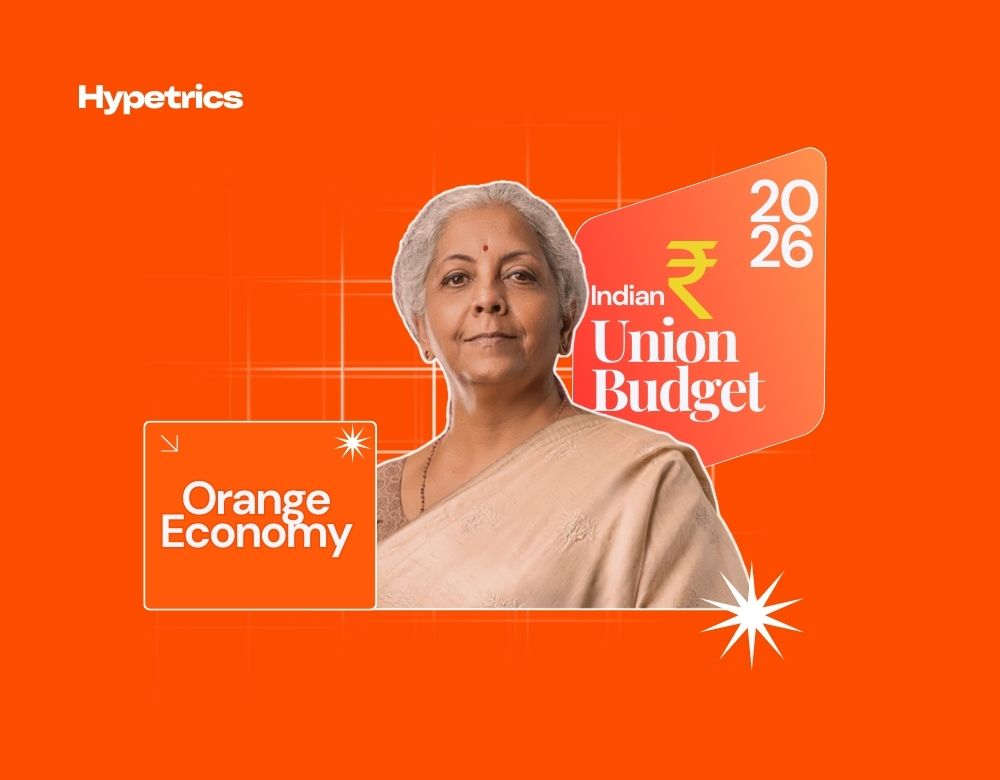
The Union Budget 2026–27 marks a definitive departure from traditional service-sector paradigms. By formally institutionalizing the Orange Economy the intersection of creativity, culture, and intellectual property India is signaling that it no longer views creative output as peripheral entertainment. Instead, it is being reframed as a high-velocity economic engine designed to insulate the national growth trajectory from the volatility of traditional manufacturing and the automation of routine services.
This pivot is a calculated response to the global shift where value is increasingly derived from ideas and ownership rather than mere execution. For a nation with India’s demographic profile, the consequences of this strategic realignment are both profound and structural.
The Architecture of Talent: From Vocational to Institutional
The most significant data point in this budget is the move to integrate creative technology into the bedrock of the education system. Supporting the Indian Institute of Creative Technologies (IICT) to establish AVGC (Animation, Visual Effects, Gaming, and Comics) Content Creator Labs in 15,000 schools and 500 colleges is not a social initiative; it is an industrial supply-chain strategy.
With the sector projected to require two million professionals by 2030, the government is attempting to preempt a massive talent deficit. By democratizing access to high-end creative tools at the secondary school level, India is preparing to convert its “youth bulge” into a global workforce that is natively fluent in digital storytelling and immersive tech. This creates a durable pipeline for urban employment that is inherently resistant to the first wave of AI-driven job displacement in more standardized service roles.
Economic Consequences and the Multiplier Effect
The fiscal intelligence behind the Orange Economy push lies in its multiplier effect. Analysis of mature markets such as the UK and US reveals that creative industries contribute between 0.5% and 7% of GDP. In India, the immediate consequences of this formalization will likely manifest in three key areas:
- Urban Economic Resiliency: Creative hubs spanning design, gaming, and digital production create dense clusters of high-value urban employment. Unlike manufacturing, which requires massive land and power infrastructure, the Orange Economy scales with digital infrastructure, making it a viable driver for Tier-2 and Tier-3 city development.
- The “Experience Economy” as a Catalyst: The focus on the “concert economy” and opening heritage sites for cultural events targets high-discretionary spending. Live entertainment, which surpassed ₹10,000 crore in 2024, triggers a chain reaction in hospitality, aviation, and local transport, creating a “short-duration tourism multiplier” that benefits the broader services ecosystem.
- IP Ownership vs. Execution: Historically, Indian creative talent served as a reliable execution partner for global studios. The Budget’s focus on “Content Creator Labs” and original IP creation signals a desire to move up the value chain. Owning the underlying characters, formats, and software code is the only way to ensure that long-term enterprise value remains within the domestic economy.
Regulatory Readiness: The Final Frontier
The intelligence suggests that the primary bottleneck is no longer talent or demand, but regulatory friction. The Ministry of Information and Broadcasting’s move toward a single-window clearance system for live events is perhaps the most consequential administrative reform in this sector.
Transitioning from a system that requires 10 to 15 separate municipal and police approvals to a streamlined digital portal reduces the “cost of doing business” for SMEs. However, for this to translate into sustained growth, the government must ensure that urban readiness infrastructure like specialized venues, crowd management systems, and predictable visa/forex norms for international artists keeps pace with policy intent.
The Union Budget 2026 has effectively repositioned India from an outsourcing hub to a creative factory. The success of this transition will depend on the speed of implementation at the school level and the reduction of regulatory barriers for creators. If executed with precision, the Orange Economy will become India’s most resilient growth engine, generating not just employment, but significant global cultural influence and high-value intellectual property.